Wild WI Finds: Foraging
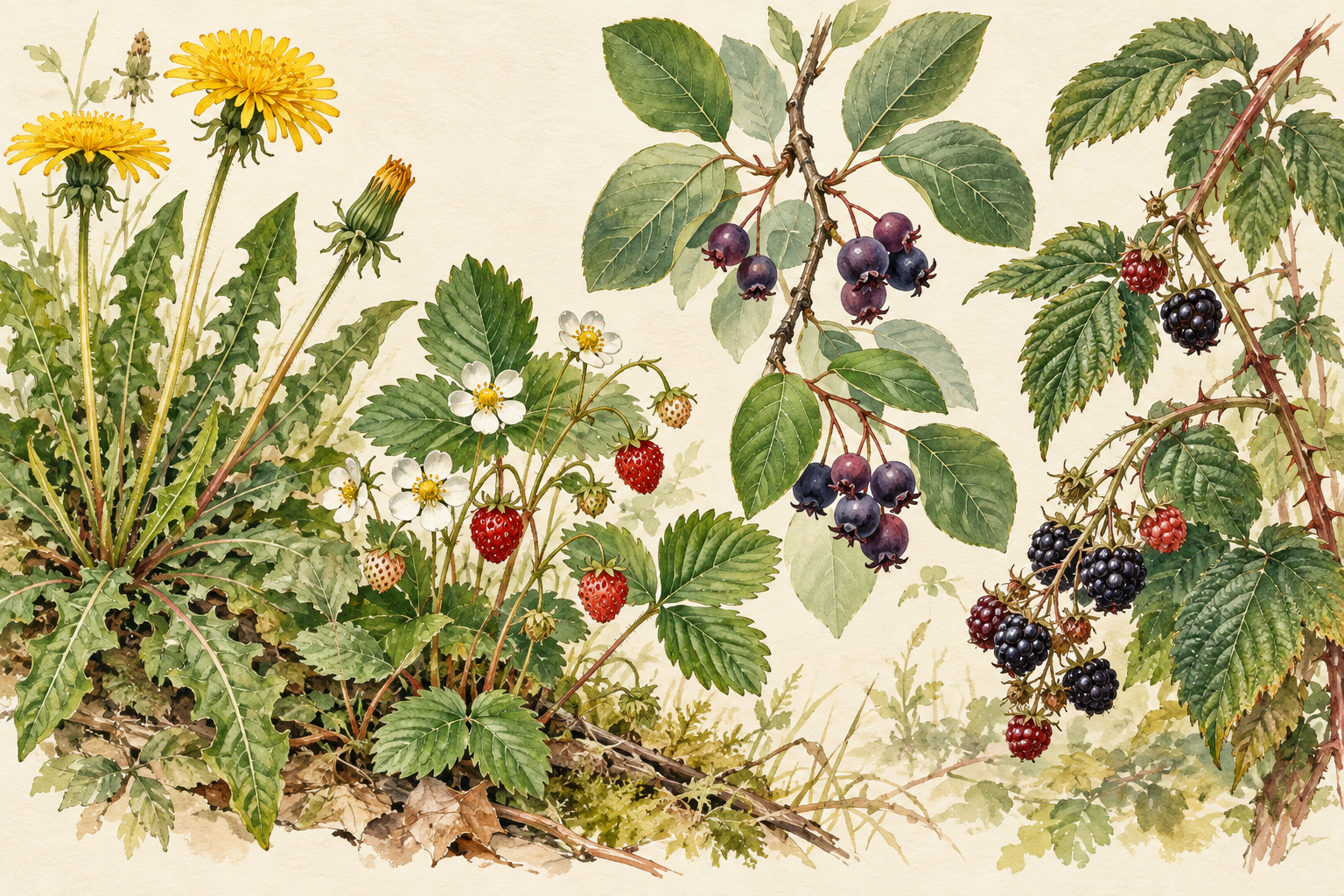
Illustrative artwork—not for plant identification.

Before You Pick
Honor the Land
These brief descriptions and artwork cannot establish safe identification. Confirm with a regional field guide and an experienced local expert before eating; never taste an unknown plant. Avoid sprayed or polluted sites, get permission, check property rules, and leave plenty for wildlife. Wisconsin DNR generally allows hand collection of edible fruits and nuts, mushrooms, wild asparagus, and watercress for personal use, subject to property restrictions; ramps and fiddleheads are not included exceptions. Gathering leaves, stems, roots, and other plant parts is generally prohibited, so dandelion greens are not a public-land harvest suggestion. Wisconsin DNR gathering rules · Dandelion guide · Serviceberry guide · Maine fiddlehead guidance · Health Canada fiddlehead safety
Wisconsin Foraging Plant Cards
These are seasonal introductions, not sufficient plant identification instructions. Seasons vary by location and weather. Card artwork is decorative botanical illustration—not an identification guide. Always get property permission and check rules before gathering.

Dandelion
Taraxacum officinale
Harvest season: Spring
Edible parts/use: Young spring leaves and flower petals in salads or cooked dishes.
Gather only from untreated places where collection is permitted; public-land leaf harvesting may be prohibited.

Wild Strawberry
Fragaria virginiana
Harvest season: Early summer
Edible parts/use: Small ripe red berries for fresh eating or jam. A low plant with three toothed leaflets and white flowers.
Confirm identification with an expert, get property permission, and leave plenty for wildlife.

Serviceberry (Juneberry)
Amelanchier spp.
Harvest season: Early summer
Edible parts/use: Ripe purple fruit in muffins or preserves. A small tree or shrub with white spring blossoms.
Eat only fully ripe fruit you have confirmed with an expert; harvest only where permitted.

Black Raspberry
Rubus occidentalis
Harvest season: Summer
Edible parts/use: Ripe dark berries (hollow center when picked) in yogurt or jam.
Thorny canes—wear sleeves. Get permission, avoid sprayed sites, and leave fruit for wildlife.

Ramps
Allium tricoccum
Harvest season: Spring
Edible parts/use: Broad leaves with an onion-garlic aroma. Where permitted, favor cultivated ramps or take only one leaf from a mature multi-leaf plant.
Deadly lily-of-the-valley and false hellebore can look similar; smell alone is not enough for identification. Leave bulbs and roots intact. Do not harvest ramps on Wisconsin DNR lands.

Red Raspberry
Rubus idaeus group
Harvest season: Summer
Edible parts/use: Ripe red berries (hollow center when picked) fresh, in oatmeal or in refrigerated sauces.
Leave canes intact and plenty of fruit for wildlife; pick only with property permission.

Asparagus
Asparagus officinalis
Harvest season: Spring
Edible parts/use: Tender young spears with tight tips. Snap only a modest number by hand where allowed; leave many to grow into ferny stems.
Confirm the plant with an experienced forager. Never eat its red berries or ornamental asparagus plants.

Ostrich Fern Fiddleheads
Matteuccia struthiopteris
Harvest season: Brief spring window
Edible parts/use: Tightly curled young fronds. Clean thoroughly, then boil in ample water for 15 minutes or steam for 10–12 minutes; discard the cooking water before sautéing or adding to recipes.
Not all fern shoots are edible. Confirm ostrich fern identification with an expert; harvest only where permitted, not on DNR lands. Never eat raw or undercooked fiddleheads.
From the Foraging Basket
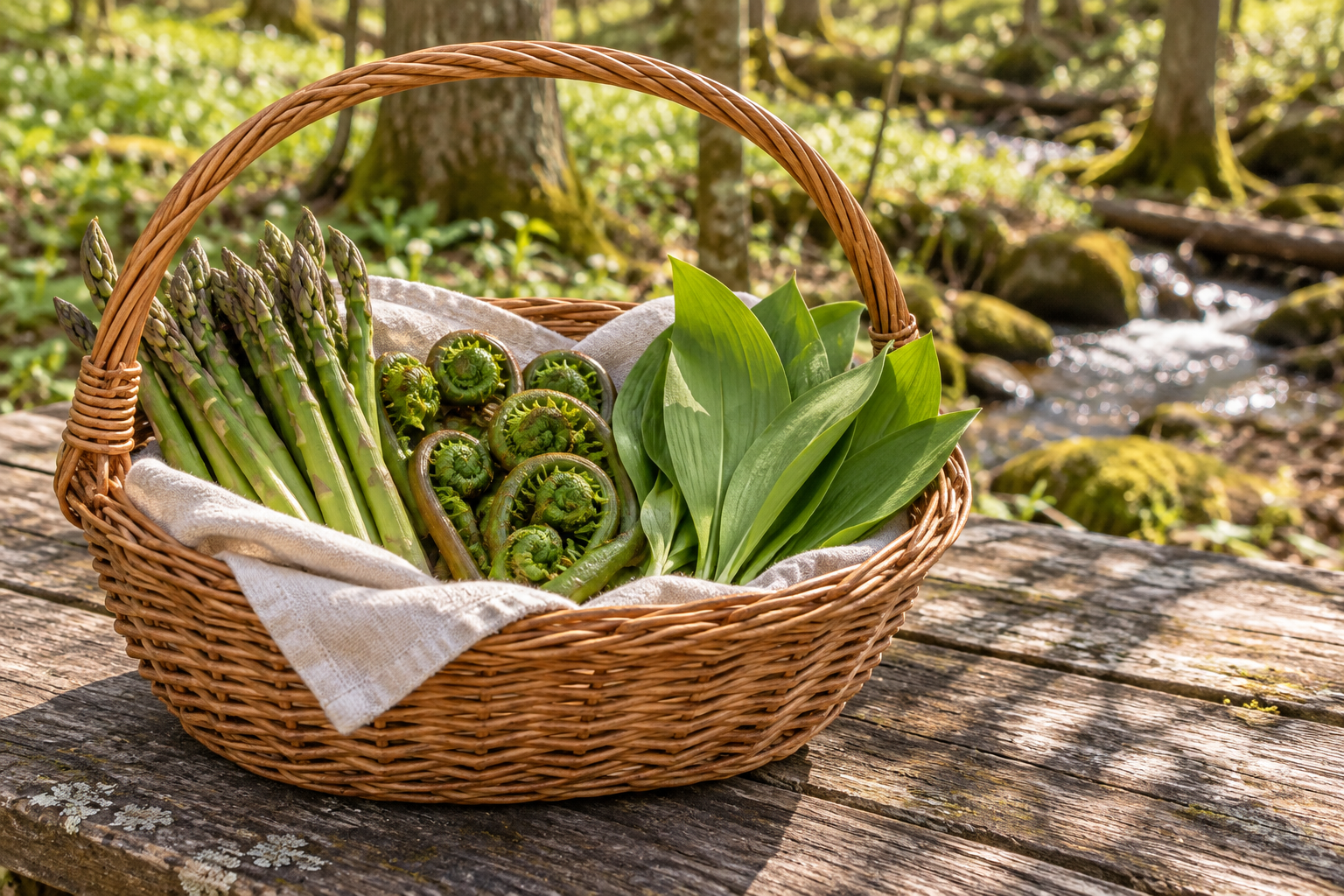
Spring greens & asparagus
AI-generated seasonal illustrations—not plant identification guides.
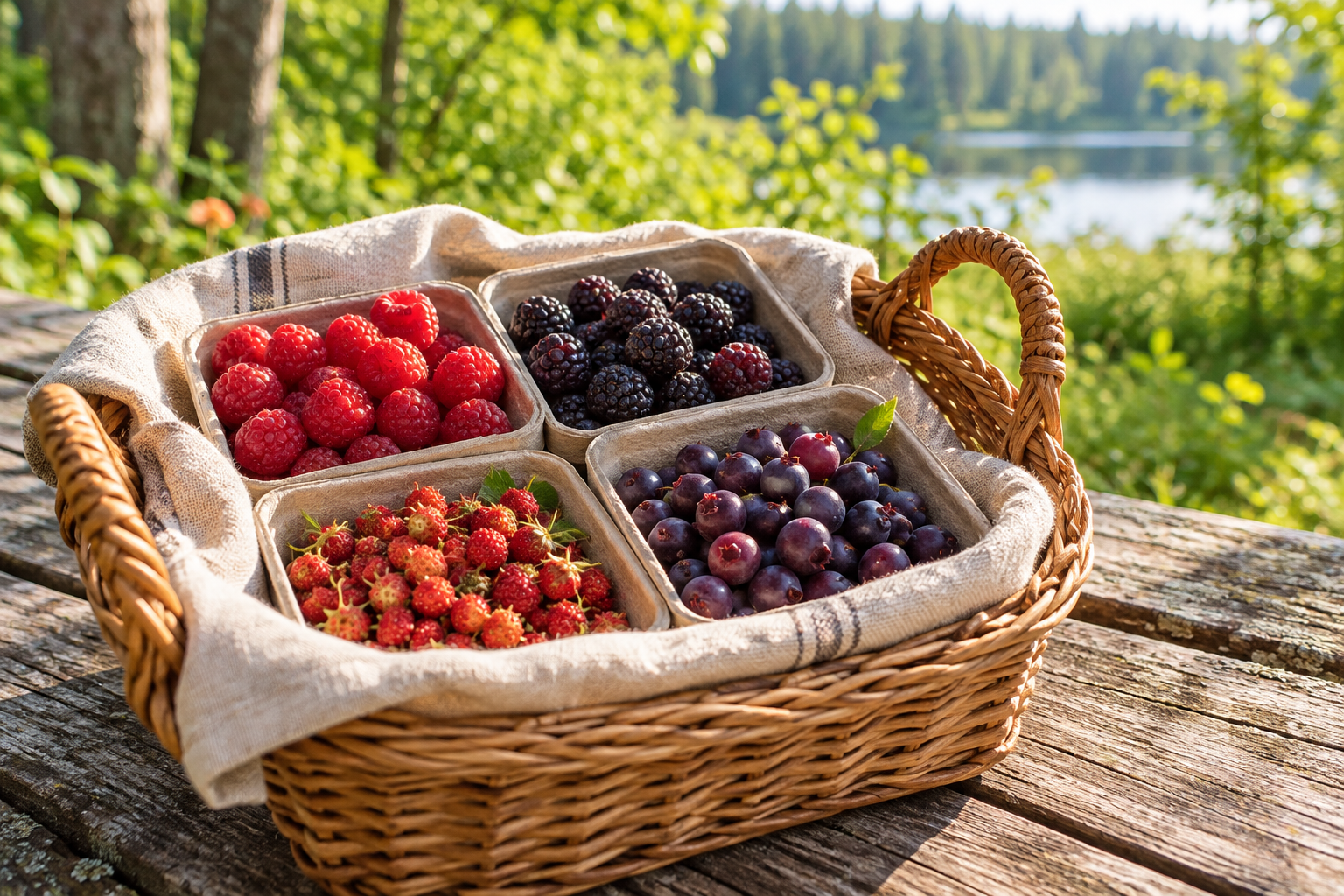
Summer berries
AI-generated seasonal illustrations—not plant identification guides.
From the Forest to Your Table
Foraging isn't just about finding food. It's about slowing down, exploring the outdoors, learning about the plants around us, and appreciating what nature provides.
Whether you're walking through Wisconsin's woodlands searching for spring morels or harvesting fresh herbs from your backyard, every ingredient has a story.
And sometimes, the simplest meals are the most rewarding.
Have you ever cooked with wild mushrooms, ramps, or nettles? I'd love to hear about your favorite Wisconsin foraging finds and how you use them in the kitchen!
Happy foraging, happy cooking, and happy exploring!
Cedar Trail Living
Rooted in Wellness. Inspired by Nature.
Before heading out with your basket, remember:
-
Know what you're gathering. Never eat a wild plant or mushroom unless you are 100% certain of its identification. Consult knowledgeable local experts when learning new species.
-
Check local regulations. Wisconsin DNR properties, state parks, wildlife areas, and other public lands may have different gathering restrictions. Always verify the rules for your specific location.
-
Avoid contaminated areas. Do not harvest near busy roads, chemically treated lawns, industrial areas, or polluted waterways.
-
Harvest responsibly. Take only what you need, avoid damaging roots or surrounding plants, and leave enough for wildlife and future growth.
-
Clean and cook properly. Wash all harvested plants thoroughly and follow species-specific cooking precautions, particularly for wild mushrooms and nettles.
For current public-land regulations, visit the